
On progress, pragmatism, and the joy of moving on.
Over the years, people have sometimes called me a perfectionist.
I’ve always found that odd. I don’t think of myself as a perfectionist at all. For a while, I even joked that I was too lazy for that. But the truth is a bit different.
I think the “perfectionist” label started with 3D printing. I’d print iterative versions of a design, talk about the problems I was having, and share ideas for how to fix them. To an outsider, it probably looked like endless flaw-hunting.
But really, I wasn’t trying to fix everything. I just wanted to fix the problems that stopped the design from doing what I needed it to do.
That’s always been my rule of thumb:
Does it do the thing?
- If yes → tidy it up, maybe add a few fillets so it looks nice, then stop.
- If no → keep iterating until it does.
And then move on.
Because here’s the thing: if you keep tweaking, you’ll always find another tweak. And another. And another. It never ends.
When I say “doing the thing,” I don’t mean scraping over the line or doing the bare minimum. I mean giving it my best shot — something I can look at and feel proud of, even if it’s flawed.
I’ve told myself I did that when I hadn’t. I think most people have. But deep down, I knew. That hollow feeling is hard to ignore.
And when I have done it — even if the result isn’t perfect — I know that too. I can say, Yeah. That’ll do.
Not because it’s half-baked — but because I did it properly. And I know the difference.
Sometimes my designs broke later, and when that happened I’d update them. But that wasn’t perfectionism either — it was just getting back to “does the thing.” And if you’ve ever heard a 3D print break, you know the sound — that unmistakable snap of plastic, quickly followed by the smack of my palm on my forehead.
If I were a perfectionist, I’d still be endlessly tinkering with my very first design, sanding the corners smoother and smoother, chasing microscopic improvements. That’s not me.
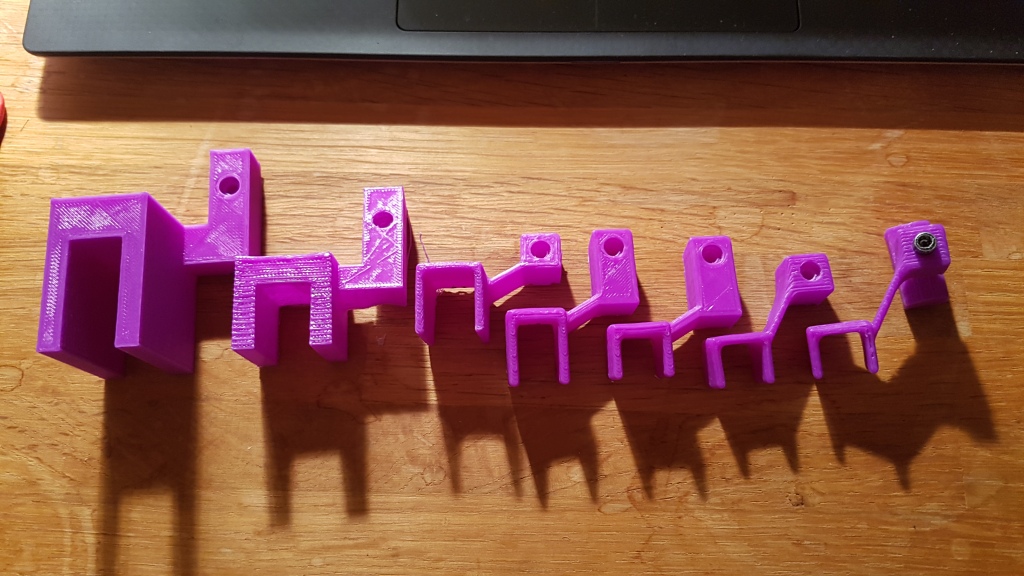
I’m not a perfectionist.
I’m a that’ll-do-ist.
That’ll-Do-ism (n.)
A pragmatic creative philosophy that scorns endless tinkering in favour of decisive “good enough.”
Core Principle: “Does it do the thing?”
If no → fix it until it does.
If yes → tidy it, ship it, nap. That’ll do.Motto: Satis Faciet — “That will do.”
Tenets:
Utility over Perfection. An ugly bridge that works is better than a pretty bridge that is never finished.
Momentum over Paralysis. Progress compounds faster than sighing at it.
Iteration over Stagnation. If it really needs more, you’ll know — and you’ll slap on Version 2 later.
Examples:
“Got lost mid-race, asked for directions, still won. → That’ll do.”
“The print fits if I trim it with a knife then hit it with a hammer → that’ll do.”
“Blog post makes sense, though I could add more unicorns → that’ll do.”
I notice I write this way too.
When I start a post, it begins with an idea I want to explain. I draft it, try to make it as clear and readable as I can. And once the idea “does the thing,” I tidy it, and I stop.
Sure, I could keep fiddling with words forever. But I know that’s not what makes me better at writing. Practice does. Every post I’ve ever written — even the rough ones — got me to the next one. Sometimes that meant resizing images at 3 a.m., bleary-eyed, just to hit publish.
So I don’t feel bad about old posts. They did the thing at the time, and they helped me grow. That’ll do.
I think the origin of my that’ll-do-ism actually comes from cycling.
When I raced, I needed a way to judge if I’d ridden well. At first, I thought the result would tell me. But I quickly learned that it doesn’t.
I lost plenty of races where I felt strong and rode well. I even won races where I felt awful. The result was about other people. My ride was about me.
So I redefined a “good ride” as this: Did I do the thing I wanted to?
If yes → that’ll do.
Even Eddy Merckx, the greatest of all time, won about one race in three. That means he lost twice as often as he won. Losing is normal. Winning is special, but rare.
I never liked losing — nobody does. I lost so many races I lost count. It stung every time. Sometimes it was embarrassing, other times humiliating. And I couldn’t go back and fix it — that’s not how racing works. Getting gapped and slowly watching the group ride away is soul-crushing — you can see them up the road, hear their gears, but there’s nothing you can do. The only option was to let it drive me forward.
I never expected to win many races. But the wins I did get? They were the cherry on top. They made all the losses worthwhile.
And in the end, I don’t even really remember the losses. I remember the wins.
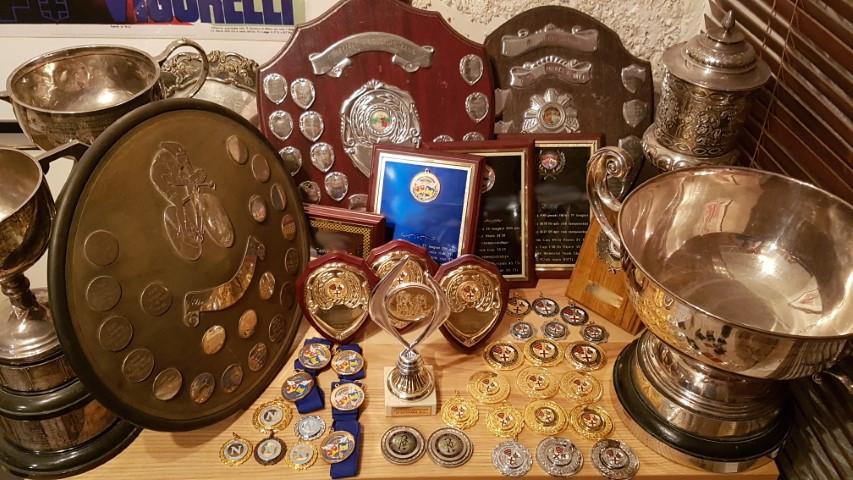
Losing is a shortcut to mastery.
Perfectionists think their strength is never losing. But I think the truth is, they don’t lose enough.
If you hold back until something feels flawless, you avoid the very thing that teaches you fastest: getting it wrong.
Iteration is just losing in small doses — a print that cracks, a sentence that clunks, a ride that blows up in the wind. Each little failure carries information. Stack enough of them and you build judgement, intuition, resilience.
Mastery doesn’t come from avoiding loss. It comes from using it.
That’ll-do is how you win.
“That’ll do” isn’t about settling. It’s about banking more reps than the perfectionist ever will.
Every “good enough” design, post, or ride is another cycle through the loop. Perfectionists polish one cycle to death. That’ll-do-ists rack up hundreds.
And the paradox is: the ones willing to lose more often will eventually win more too.
With racing, there’s a finish line that forces you to stop. With 3D printing or writing, there isn’t — you could keep going forever. That’s why my cycling lesson matters so much:
Perfection isn’t the point.
Progress is.
I see now this isn’t just how I make things. It’s how I live. I never found the perfect house, or the flawless job, or the immaculate plan. I’ve just chosen the one that worked, patched it when it cracked, and carried on. That’ll do.
And it isn’t just me. Nature itself is a that’ll-do-ist. Every life is a shuffled deck of DNA, tested against a single rule: survive long enough to pass something on. If it does, the universe stamps its quiet verdict: that’ll do.
Most attempts vanish. Some limp and fade. But the ones that scrape through become the scaffolding for what comes next. Across billions of tries, “good enough” piled into wings that fly, eyes that see through blind spots, spines that bend but still hold us upright, tailbones we don’t even need, and brains that stutter yet dream of infinity.
We are all version numbers in an endless experiment.
Not perfect, never perfect — but somehow enough.
Perfection didn’t get us here.
That’ll do did.
 Davide la Locomotive
Leave a comment