
“It is what it is.”
The corporate shrug. The conversation killer. The ultimate non-justification.
This phrase doesn’t solve problems—it cements them.
In this post: why it quietly ruins teams, what leaders should say instead, and how to respond without throwing your monitor out the window.
The phrase “It is what it is” is terrible. And here’s why:
- It’s a tautology.
It’s always true.
All things are the things that they are.
You don’t need to say it.
Cheese is cheese. Yes. Thank you. - It’s a null statement.
It adds nothing to a conversation because it’s always true.
You can literally remove it to reduce the compiled output—erm, I mean, conversation.
But the worst part is:
When people say it, they don’t actually mean it literally.
What they usually mean is something closer to:
“This is the way it is, and you just have to accept it.”
—which is also terrible. And here’s why:
- It’s incredibly negative.
It’s saying: “You can’t change anything, so don’t bother trying.” - It’s a self-fulfilling prophecy.
If you don’t try to change anything, then nothing changes—and the phrase becomes true.
But you never even found out if it could have changed, because you never tried. - It’s used to justify bad decisions.
It’s a non-justification justification.
A way to sound like you’re explaining something… without actually explaining anything.
“Why are we driving off that cliff?”
“It is what it is.”
Some people say it so often, I wonder if it’s tattooed on the inside of their eyelids or is their family motto.
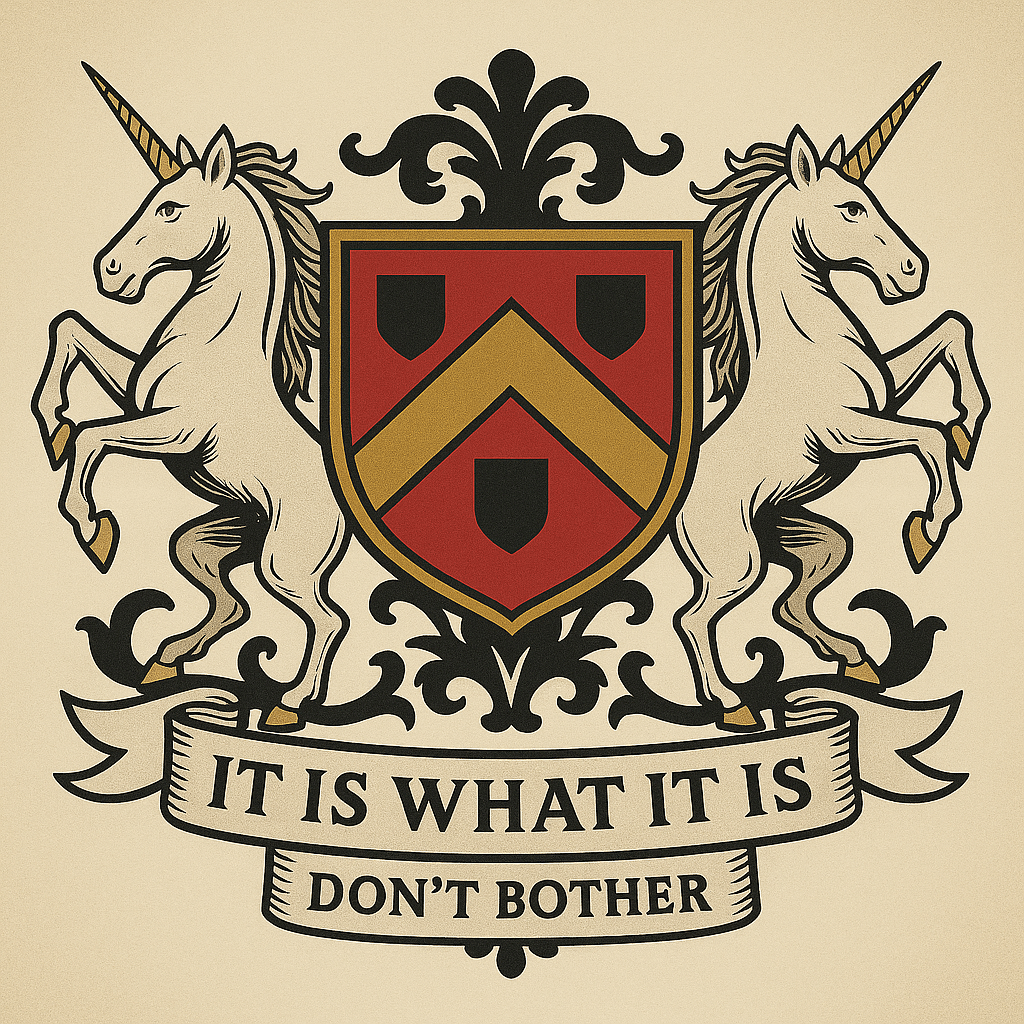
It Is What It Is-ing
I call it “it is what it is-ing.”
It’s when a manager uses the phrase to stop the conversation, shut down questions, and avoid explaining a bad decision.
“It is what it is.”
Translation in management:
- “I don’t have a justification that makes sense.”
- “We’re stuck, and I’m okay with that.”
- “Stop asking questions.”
Sometimes, a decision comes from so high up that you can’t challenge it.
In those cases, I think it’s better to simply acknowledge:
“I can’t justify this; it’s been imposed.”
At least then, people know where they stand.
But if every time you ask a reasonable question, you get shut down like this, you stop asking.
And when nobody questions bad decisions, more bad decisions follow.
That’s what bad managers want.
The Impact
When a manager says “It is what it is,” they’re just pressing the override button.
Not because they can’t explain—because they won’t.
I once worked at a company with a long-running branch:
Over 1,000 commits. No tests. No documentation. No code reviews.
I persuaded them not to merge it until it had tests and code reviews.
One day, I came in. It had been merged.
I asked why.
“It is what it is.”
And just like that, the mess became everyone’s problem.
Here’s the thing:
When a manager says “It is what it is,” what they’re really saying is:
“I’ve stopped trying.”
And when leaders stop trying, everyone underneath them has to carry that weight.
It’s lazy.
It’s easy.
It avoids the hard work of explaining, questioning, reflecting.
And worst of all:
It signals to the team:
“Don’t bother. Nothing will change.”
A Personal Reflection
When I was a Scrum Master, I trusted my developers.
And they trusted me.
I never said “It is what it is”—because I would’ve lost that trust.
If I couldn’t explain a decision to a reasonable person…
Maybe it wasn’t a good decision.
Developers weren’t asking questions to be awkward.
They asked because they had genuine concerns.
I always took those concerns seriously.
True leadership isn’t about passive acceptance.
It’s about asking:
- Why is it this way?
- Does it have to stay this way?
- What’s one thing we could try?
Investigating a question—and finding a better way—shouldn’t be seen as an attack.
It’s collaboration. It’s a good thing.
What To Do Instead
If someone says “It is what it is,” you could try replying:
“But what is it, though?”
I’ve never deployed this in real life.
I don’t know what would happen.
I suspect they’d either change the subject or stare at me like I’d spoken ancient Greek.
But I like to think—for a moment—they’d realise:
It isn’t just “what it is.”
It’s a choice.
A decision.
A thing someone made… and could unmake.
Practical advice
If you’re on the receiving end:
→ Ask a clarifying question:
- “Could you explain a bit more?”
- “What’s the business reason?”
There might actually be a valid reason—they just didn’t articulate it yet.
→ Don’t give up:
Every time a poor decision goes unchallenged, it invites more poor decisions—not fewer.
If you catch yourself saying “It is what it is”:
Stop.
It makes no sense.
Would you seriously say:
“The thing is the thing that it is”?
It’s equivalent—and equally meaningless.
Instead:
→ Try to explain.
→ Use reasoning and logic.
If you can’t explain it to a reasonable person…
Maybe it’s not a good decision.
→ And if you must press the override button?
Be honest.
Just say: “This isn’t up for discussion.”
At least then, everyone knows where they stand.
Ending
If your argument is “It is what it is”…
then you have no argument.
And that’s what that is.



Leave a Reply